In the highly competitive world of e-commerce, getting people to visit your site is only the first step. The real challenge is turning those visitors into paying customers, and good UX design plays a critical role in making that happen.
In Australia, where online shoppers compare different websites before making a purchase, design goes beyond appearance. It directly influences how users interact with a site and whether they choose to buy. It is about how users interact with the site, how much they trust the site, and whether the site will be successful in getting them to buy the products. Good UX design turns browsers into buyers, while poor UX pushes potential customers toward competitors.
It doesn't matter whether you are a small Shopify store or a large online retailer; the most important thing you can do to improve your conversion rate without increasing your advertising budget is to invest in good UX design. Many businesses achieve this by working with a UX design agency to improve their digital experience and conversions.
In this blog, we look at how good UX design directly affects e-commerce conversion rates and why it matters for online businesses.
How Good UX Increases Sales on e-commerce Websites
Good UX design means a buying process that is not stressful and is pleasant. As soon as a customer lands on an e-commerce site, they should immediately understand what to do next and how to find products easily. This is exactly what strong UX design aims to achieve, and it’s a key focus when improving the performance of online stores, often guided by a UI UX Design Agency in Melbourne.
A well-designed user experience (UX) can improve overall conversions in these ways:
- Faster Decision-Making
Good UX design improves decision-making by offering a clear layout and intuitive navigation. Optimal structured product categories make it easier for customers to find what they're after without thinking, and directly increase the chance of a purchase.
- Reduced Bounce Rates
A well-structured website keeps users engaged for longer, which increases conversion chances, especially when combined with fast load speed and smooth UX design.
- Higher Checkout Completion Rates
A simplified checkout process with fewer steps, clear pricing, and multiple payment options significantly reduces cart abandonment.
- Increased Trust and Credibility
Consistent and clear information, especially around shipping and returns, builds trust and improves credibility through professional UX design.
Ensuring increased website conversion opportunities as aesthetically pleasing and reliable structured UI is why many organisations in Australia partner with a UI UX Design Agency in Melbourne.
Core UX Elements That Influence Buying Decisions in e-commerce Websites
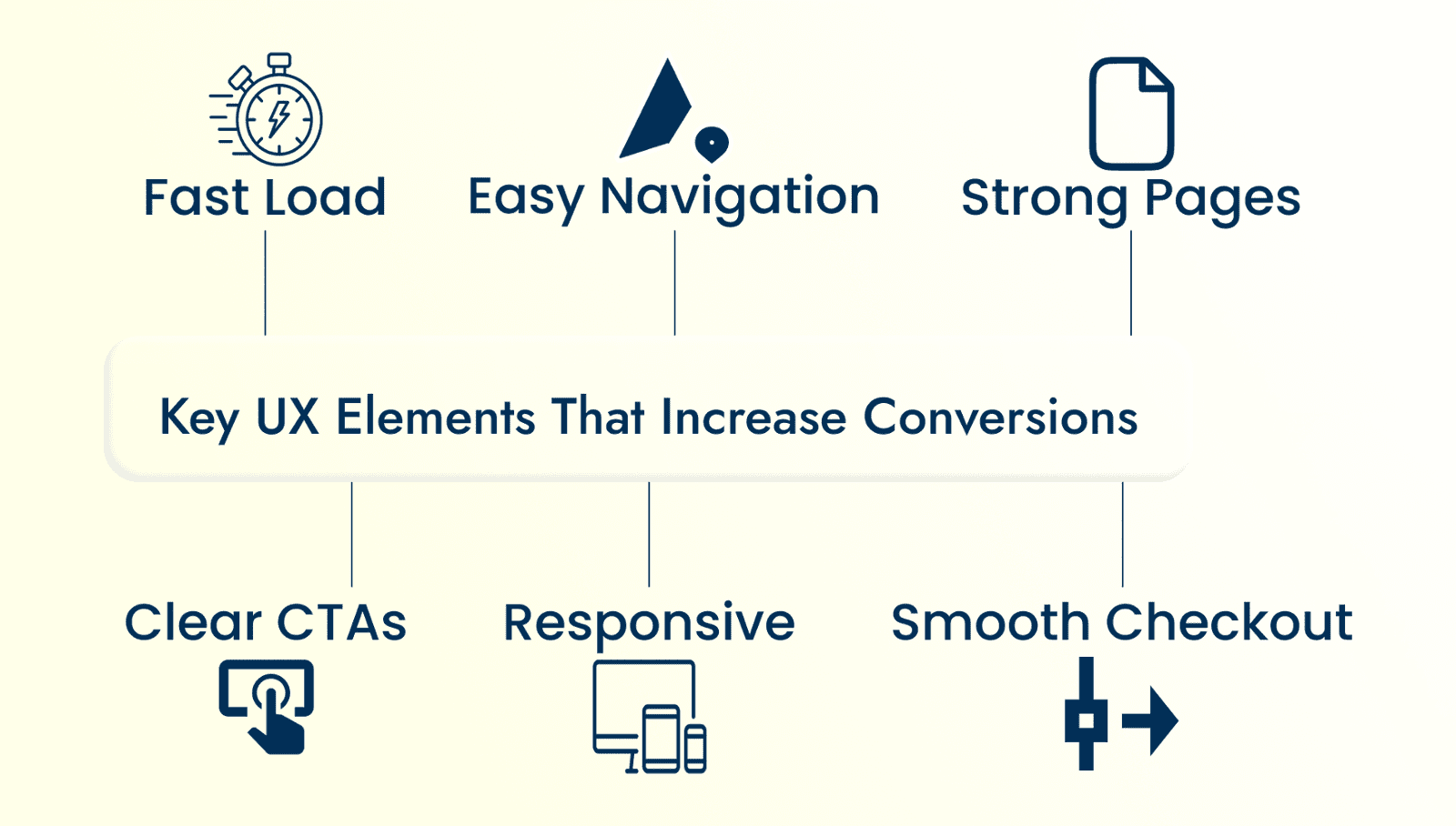
Some aspects of user experience can be clearly measured and tracked based on how users move toward a purchase, and these are typically improved through structured testing and ongoing design refinements.
- Website Speed and Performance
Even in regional areas of Australia, users expect fast and reliable website performance. Speed increases the likelihood of multiple purchases.
- Mobile Responsiveness
Most Australian users engage in mobile shopping. Mobile web design and website responsive UX mean the website’s design is mobile-focused as the primary concern. Design navigation must also be simple, while text is readable, and buttons are easy to tap.
- Clear Navigation and Search Functionality
Improving user experience to allow customers to find their products in mere seconds must become a key priority, with tools such as predictive search and filtering being applied.
- High-Quality Product Pages:
Thorough descriptions
Transparency in Pricing
Customer reviews and ratings
- Strong Call-to-Actions (CTAs)
Clear and visible “Add to Cart” and “Buy Now” buttons should be strategically designed to encourage purchases.
- Seamless Checkout Experience
Australian customers prioritise a simple and quick checkout. Guest checkout options should be available, and payment methods such as Afterpay, PayPal, and major credit and debit cards should be offered.
UX friction points in the Australian market
Even well-designed websites can lose conversions due to specific UX friction points, especially when they fail to meet local expectations. That’s why many businesses choose to review and refine their UX through regular audits.
- Unexpected Shipping Costs
When customers see shipping fees at checkout, it can be very annoying for them. This problem is very common in Australia, where people are extremely annoyed by any kind of unexpected shipping charges.
- Lack of Local Payment Options
If a webpage is available to international customers, it should be equipped with Afterpay and Zip Pay because these Buy Now, Pay Later services are available in Australia. If these methods are unavailable, consider more potential sales lost.
- Slow-Loading Pages
Performance issues are highly important in Australia, particularly for people residing outside urban areas.
- Complicated Checkout Processes
The checkout process cannot involve any unnecessary hurdles like making users register and fill out long forms.
- Poor Mobile Experience
If the mobile experience is poor, users are more likely to stop browsing and abandon their purchase.
Fixing these friction points helps create a more intuitive and effective user experience, which is why many businesses focus on improving their UI strategically.
Common UX gaps in Australian e-commerce stores
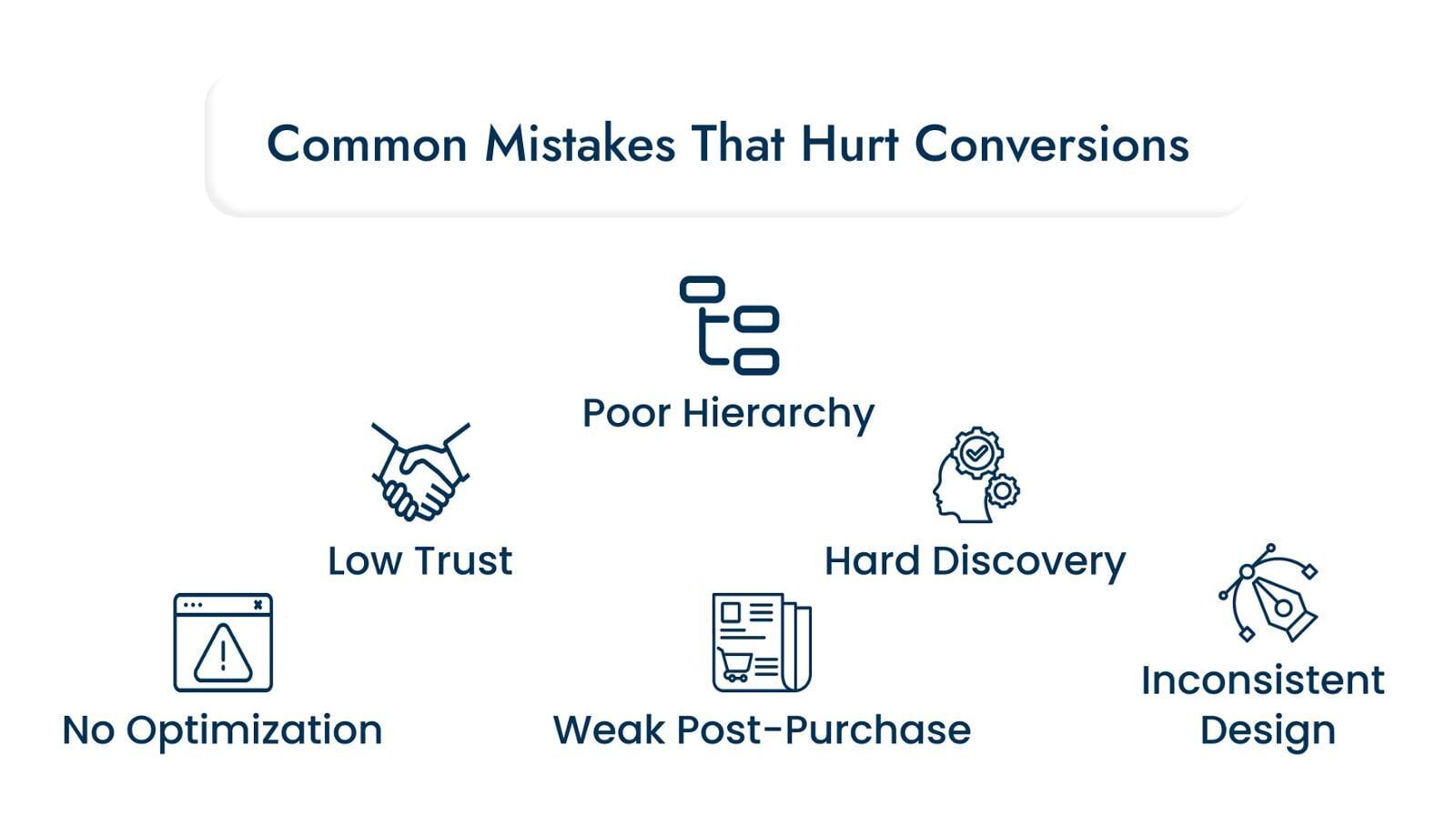
- Lack of a Clear Information Hierarchy
When there is no proper information hierarchy on the page, users will find it hard to find necessary information.
- Weak Trust Signals
The presence of reviews, return policy, and other elements will add trustworthiness to your website.
- Inconsistent Design Elements
Inconsistent design in terms of fonts, colours, and spacing looks unprofessional.
- Poor Product Discovery Experience
Without proper product discovery options like filters, classifications, or recommendations, a customer won't be able to find a suitable product.
- Ignoring Post-Purchase UX
To fail to think about the user experience after the purchase process would be unwise. This includes order confirmation, order tracking, and any other follow-up communication processes.
- No Data-Driven Optimisation
Many businesses fail to analyse user behaviour. It is hard to know what is causing the conversions without learning about the heatmap, analytics, and A/B test. This data is then used to make more informed and effective UX decisions.
In order to bridge this gap, a comprehensive approach to user experience should be developed.
Final Thoughts
However, effective UI UX design goes beyond aesthetics. Good UX design affects user interaction and is vital when it comes to conversions on an e-commerce website. All the elements, from the navigation through the product pages to the checkout process, affect the buyer’s experience.
Considering that Australia is known for having some of the fiercest competition in the e-commerce industry, companies that focus on their UX are going to benefit more from it.
For businesses in Australia, improving UX design can help identify existing issues and create a smoother experience that leads to better conversions.
Grow your e-commerce revenue with Flexbox Digital, a trusted UX Design Agency in Melbourne delivering user-focused design.